How to Extend the Lifespan of Your Pole Barn
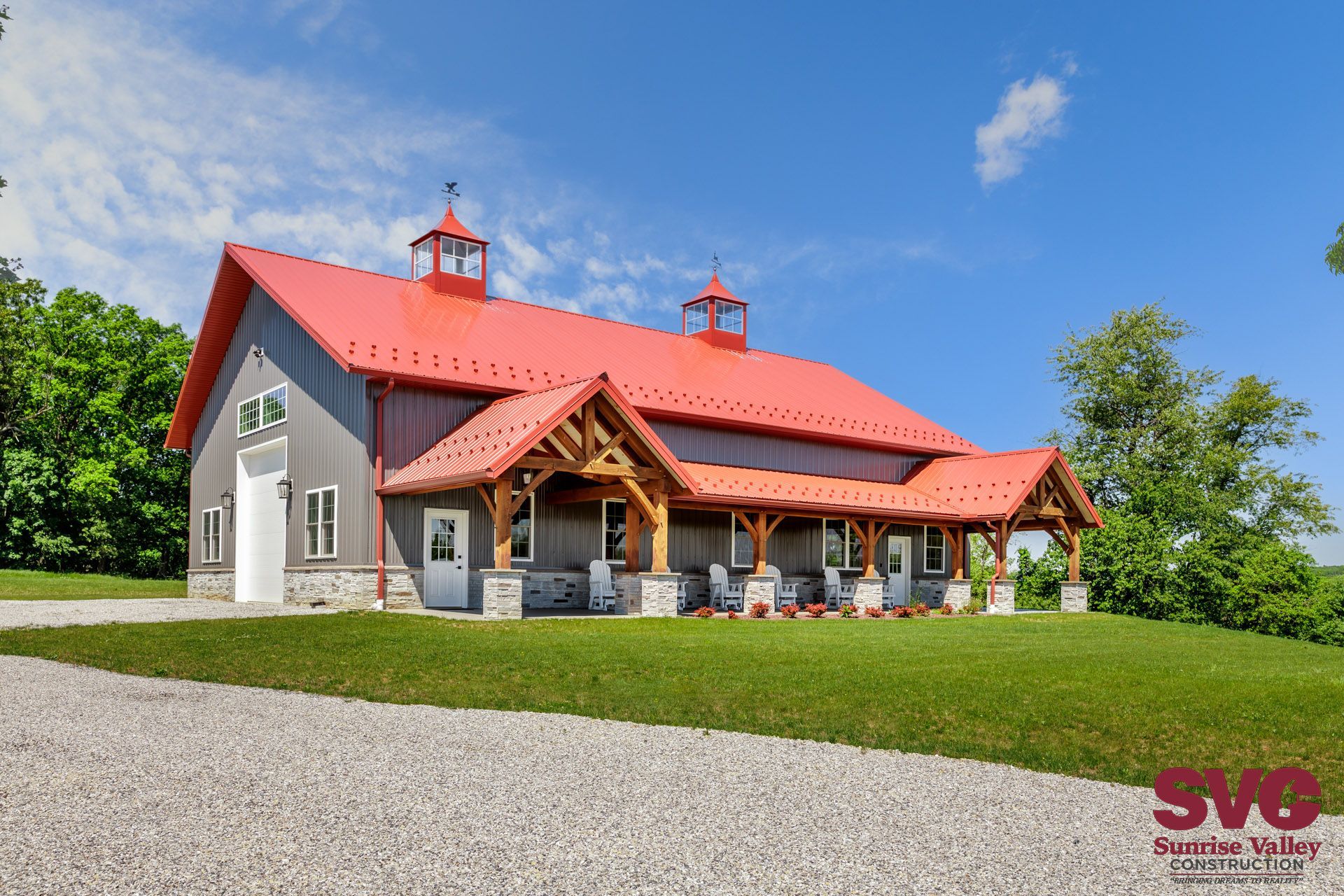
Whether it’s a new garage for your classic cars, a workshop for your weekend projects, or a storage barn for your equipment, a Sunrise Valley Construction pole barn is designed to handle the elements.
But even the toughest structures benefit from a little care and maintenance.
By following this simple guide, you can help your pole building last for generations.
Table of Contents
Inspecting the Exterior
The Metal Siding Scan
Take a slow walk around the perimeter. You’re looking for:
- Scratches or Dents: If a rogue rock from the mower or a stray branch hits the siding, it can nick the protective coating.
- The Fix: Use a small bottle of touch-up paint to seal any deep scratches. This prevents moisture from reaching the steel and causing rust.
Check Your Fasteners
Metal expands and contracts as the Pennsylvania temperature swings from freezing winters to humid summers. Over time, this can cause screws to back out slightly.
- What to Look For: Check for any screw heads that aren't sitting flush against the metal or washers that look cracked.
- The Fix: Give them a quick turn to snug them back up. A tight seal keeps your building weather-tight.
Maintain a "Clear Zone"
Moisture is the enemy of any structure. To keep your siding in top shape, give it some breathing room:
- Vegetation: Keep bushes, tall grass, and weeds trimmed at least 6–12 inches away from the base.
- Storage: Avoid leaning firewood, ladders, or scrap metal directly against the siding.
- Airflow: Proper spacing allows air to circulate, which dries out the foundation quickly after a storm.
Roof & Gutter Care
The roof is the most hard-working part of your pole building. It takes the brunt of the sun’s UV rays and the weight of snow. Keeping an eye on it from the ground can prevent a small leak from becoming a big headache.
The Visual Roof Scan
You don’t necessarily need to climb a ladder to check your roof. A pair of binoculars or a high-quality phone camera zoom can help you spot issues from the safety of the ground.
- What to look for: Look for any panels that seem slightly lifted, or flashing (the metal trim around the edges) that looks loose or bent.
- Post-Storm Check: Always do a quick visual scan after a high-wind event or a heavy hailstorm.
Keep the Gutters Clear
Clogged gutters are the #1 cause of "mystery" leaks and foundation issues. When water can’t flow through the downspouts, it backs up under the roofing or pools at the base of your posts.
- Seasonal Cleaning: Clear out leaves and debris at least twice a year (late spring and late fall).
- The "Splash" Test: During a rainstorm, check if water is spilling over the sides. If it is, you likely have a clog.
Sealant & Vent Inspection
Areas like ridge vents, skylights, or chimney pipes rely on sealants to stay dry.
- Sun Damage: Over the years, direct sun and extreme heat can cause caulking to dry out and crack.
- The Fix: If you see cracked sealant, scraping away the old material and applying a fresh bead of high-quality silicone can save you from a future interior leak.
Winter Snow Management
Our buildings are engineered for heavy snow loads, but "ice damming" can still occur if the gutters are full of frozen debris.
- Clear the Path: Ensure downspouts are clear so that as snow melts, the water has a direct path away from the building.
- Ground Drainage: Make sure the area where the downspout empties is sloped away from the building to protect the structural integrity of your posts.
Interior Maintenance
While the exterior takes the brunt of the weather, the interior of your pole building tells the story of its long-term health. A quick "look up and look down" once a season is all it takes to spot potential issues before they grow.
Watch for Condensation
If you notice water droplets on the underside of your roof panels or damp spots on the floor, your pole building is not ventilating properly.
- The Check: Look for water stains on insulation or wood framing.
- The Fix: Ensure your soffit vents and ridge vents aren't blocked by bird nests or debris. Proper airflow is the best way to keep your interior dry and your stored valuables safe.
Pest Inspection
Pests love the sturdy shelter of a pole building just as much as you do.
- Telltale Signs: Look for small piles of sawdust (carpenter ants), mud tubes on the posts (termites), or nesting materials in the rafters (birds or rodents).
- Prevention: Keeping the "Clear Zone" we mentioned in Section 2 (moving woodpiles away from the walls) is your best defense against wood-destroying insects.
Post & Foundation Stability
Your building is only as strong as the posts it stands on.
- The Visual Check: If your posts are exposed, check the base for any unusual dampness or signs of shifting.
- Ground Level: Ensure the soil around the perimeter hasn't eroded. If you see puddling against the building after a rain, add a bit of fill dirt to slope the water away.
Need a Hand?
Whether you have a question about a specific repair or are ready to expand your property with a new addition, the Sunrise Valley team is here for you.
We’ve been building across Pennsylvania and beyond with a commitment to quality that doesn't end when the last screw is driven.